How to Choose the Right Paint Finish for Every Room in Your Home
You picked out paint colors for a room. Maybe you even settled on one. Then you hit a wall of unfamiliar terms: eggshell, satin, semi-gloss. None of them explain themselves, and nothing tells you which one actually matters for your space.
Most advice says to match sheen to the room: a glossier finish for the kitchen, something softer for the bedroom. That assumption doesn’t hold up anymore. The real answer to getting a paint job that holds up isn’t about sheen at all. Treating sheen as the deciding factor is exactly what leads homeowners to the wrong choice, room after room.
This guide breaks down what actually determines how a wall performs. Then it walks through each room in your home based on what it genuinely needs, not what a sheen chart tells you to pick.
What Actually Determines How a Wall Performs
Sheen is a visual property. It describes how much light a paint film reflects, nothing more. The right paint has the correct properties built in for a given room, and that’s what actually determines performance, not its sheen level.
Durability, washability, and moisture resistance come from the paint’s quality and formulation. Sheen level does not necessarily determine which paint goes on a wall here. Not in a kitchen. Not in a bathroom. Not anywhere in the home.
Many homeowners assume a higher sheen means tougher paint, and that a glossier wall must clean better. Professional-grade paint builds grease and moisture resistance directly into the product, independent of sheen. The quality of the paint itself does that work, not the sheen level people tend to credit for it.
This is where paint quality actually shows up. Premium lines from established manufacturers like Benjamin Moore and Sherwin-Williams build durability, fade resistance, and washability into the product itself. That performance holds steady across their finish options. A flat or eggshell wall painted with the right product resists daily wear just as well as anything sold as tougher or glossier. A budget paint in a high sheen doesn’t make up for that gap. A premium paint in a low sheen doesn’t need to.
This is why every room ahead calls for a paint that matches what it needs to do, never a sheen to chase.
How Room Function Should Drive Your Paint Choice
Three factors determine what a room’s paint actually needs to do: traffic level, moisture exposure, and daily use. Matching those factors to the right paint properties, room by room, is the real decision you’re making. It’s a different decision for every room in the house, and the sections below walk through each one in turn.
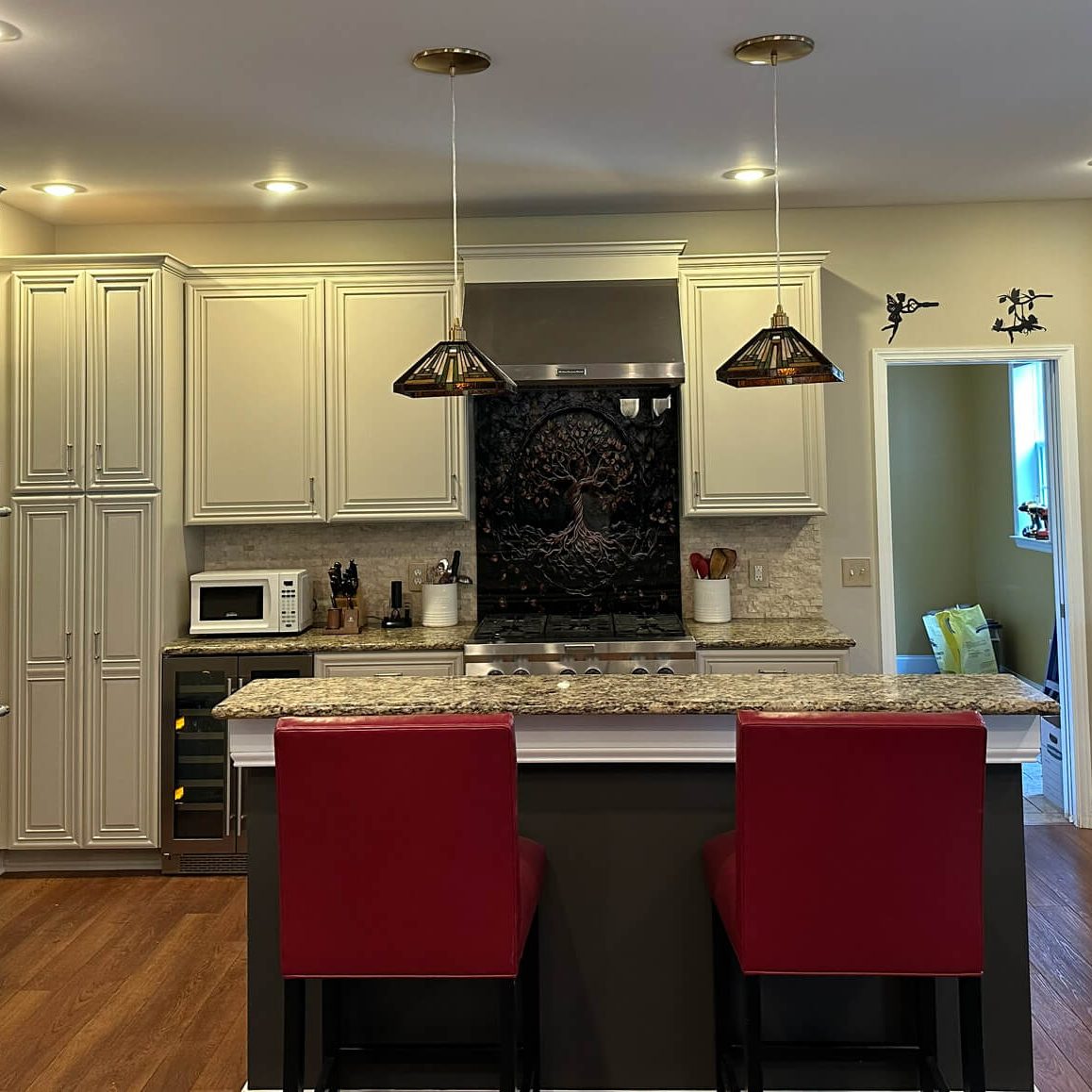
Kitchens
Kitchens often need a grease- and moisture-resistant paint.
Cooking sends airborne grease and steam onto nearby walls. Kitchens need more frequent wall wipe-downs than almost any other room in the house. That combination calls for a paint built to handle it. The wall behind the stove and the section near the sink take the brunt of this exposure. Both often show wear before the rest of the kitchen shows anything at all.
Does a shinier wall clean better? It doesn’t. Washability comes from the paint’s formulation, not its shine. The right paint wipes clean in seconds regardless of how it looks. The wrong one shows a grease shadow within a year, no matter how much it shines. That’s the real cost of choosing paint based on appearance instead of what the kitchen actually puts it through. It’s a cost that shows up gradually, slowly enough that most homeowners never connect it back to the original paint decision.
Bathrooms
Bathrooms often need a moisture- and mildew-resistant paint.
Humidity, condensation, and direct water contact near sinks and tubs happen daily in this room. Lancaster County’s seasonal humidity swings only add to that load here. That makes moisture resistance less of a nice-to-have and more of a baseline requirement. A bathroom in this region deals with humid summers pushing moisture into every surface. Colder months bring poor ventilation that traps moisture right back in. The paint needs to hold up through both.
What about a small powder room with no shower? It still needs it. Hand-washing and poor ventilation generate enough humidity on their own to matter, even without a shower or tub running hot water for twenty minutes a day. The right paint resists the moisture a bathroom generates every single day, regardless of how it looks on the wall. The ceiling and the wall closest to any water source show the effects first if that resistance isn’t there.
Bedrooms
A standard interior paint performs well in most bedrooms.
Low traffic and minimal moisture mean specialized resistance simply isn’t necessary here. Bedrooms just don’t put a paint film through the same demands a kitchen or bathroom does. Spending extra on performance properties a room will never actually test doesn’t buy you anything.
A bedroom shared with kids is a bit different. A washable option can still help there, but that comes down to household use, not a requirement from the room itself. Crayons, handprints, and the occasional spill call for something wipeable. A guest room that sees a few nights a year has no such demand. Outside of that case, the paint decision carries very little weight here compared to the rest of the home.
Living Areas
Living rooms and dining rooms generally do well with a standard formulation. A washable upgrade is worth considering in busier households.
These rooms see more contact than a bedroom, but less than a kitchen or bathroom. That puts them in the middle of the spectrum. It’s also why the right answer varies more from home to home here than it does in a kitchen or bathroom, where the room’s function makes the decision fairly clear-cut either way.
How do you decide which way to go? Base it on actual household activity. Kids, pets, and frequent guests push toward a washable paint for easier upkeep. These are the households where a wall near a couch or a dining table takes real contact week after week. A quiet, low-traffic living space can use a standard formulation without any issue. A formal dining room used mainly for holidays falls squarely into this category, while a family room that doubles as a playroom does not. Matching the choice to how the household actually uses the space avoids over-specifying or under-specifying either way.
Hallways
Hallways often need a scuff-resistant, washable paint.
They take on more repeated contact than most other rooms, despite not being a place anyone spends much time. Hands brush the walls, and furniture squeezes through tight spaces on the way in and out. That contact adds up over years, even in a house where the hallway itself rarely gets a second thought.
Hallways don’t see frequent cleaning, so does durability really matter here? It does, but the need comes from contact frequency, not cleaning frequency. A scuff-resistant paint keeps a hallway looking presentable for years, even without frequent upkeep. A standard wall in that same spot starts showing scrapes and scuffs at hand height within the first year or two.
How Lighting Changes the Way a Room Reads
Light interacts with whatever paint is already on the wall. You don’t need a sheen choice to manage that.
Stronger light intensifies how saturated a color looks. Dimmer light mutes that same color, regardless of the paint’s finish. A room flooded with afternoon sun shows a bolder, more vivid version of a color. That same paint reads more subdued in a room lit mostly by lamps in the evening.
Does a north-facing room need a different paint than a south-facing one? Not really. Lighting direction changes how a color reads, not which paint you should choose. A north-facing room tends to read cooler and slightly more muted throughout the day. A south-facing room reads warmer and brighter. That’s a color and lighting conversation, not a reason to reach for a different paint product. This is exactly why a color that looked perfect on a paint chip can look different once it’s actually on the wall. It’s also why a professional weighs a room’s lighting when finalizing color.
The Right Paint for Every Room Comes Down to Its Properties
The right paint for each room comes down to matching its properties to what that room needs to withstand: traffic, moisture, and daily use.
Now you know what to actually ask a painting professional. Not which sheen looks best, but what the paint needs to do in that specific room. That might mean standing up to a busy kitchen, resisting Lancaster County’s humidity in a bathroom, or simply performing reliably in a low-traffic bedroom without any added cost. Once you’ve settled on the right approach for each space, it helps to know how long a professional interior painting project actually takes, so you can plan around it. Our interior painting services take exactly this property-first approach, room by room.
Ready to move forward? Request a quote, and we’ll review your project and provide a detailed, upfront estimate. No surprises.